August 20, 2026
Mobility
From Fleet Electrification Goals to Deployable Campus Infrastructure
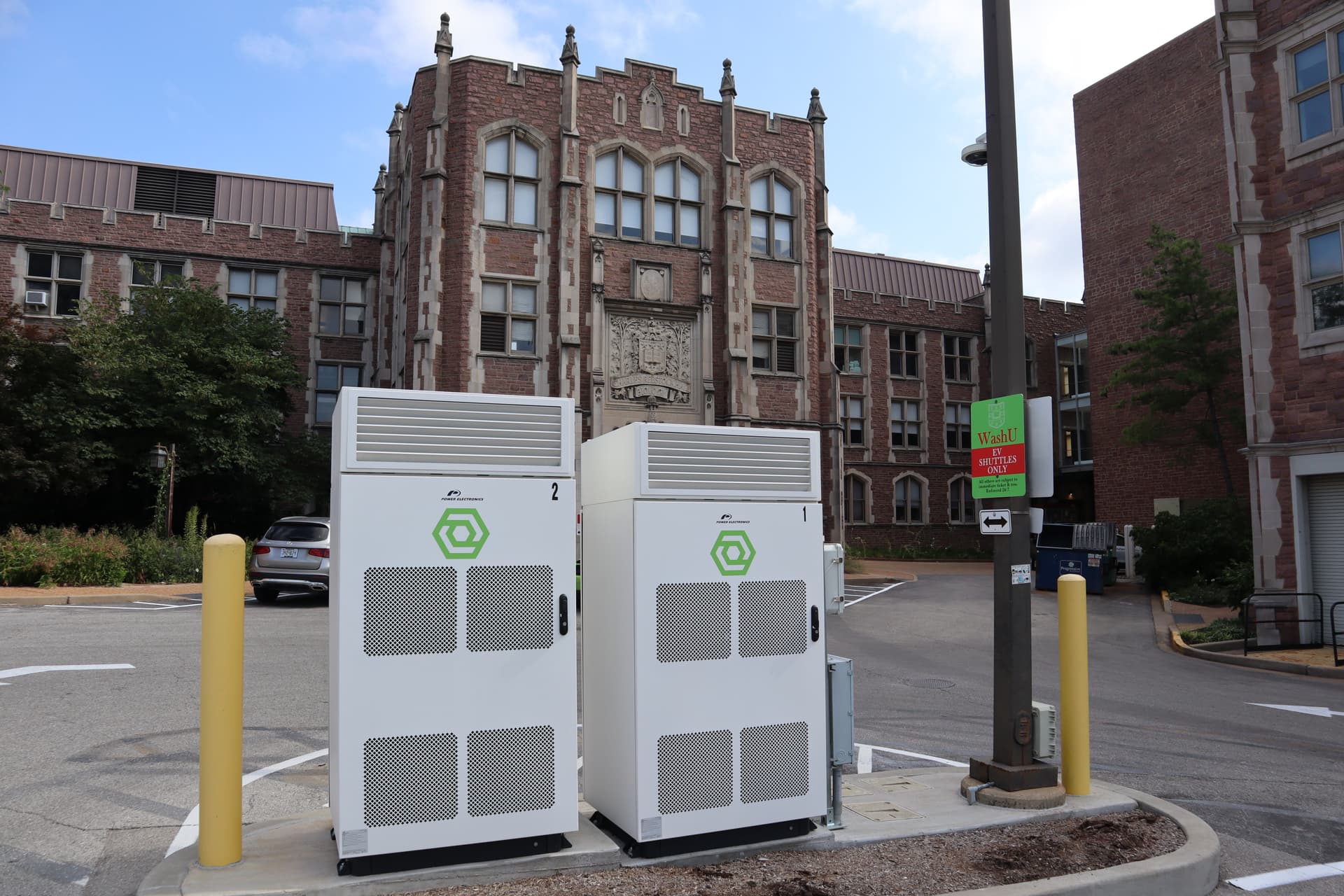
Fleet electrification is quickly becoming an infrastructure priority for universities. As campuses work to reduce emissions and meet sustainability commitments, they must also ensure that transportation electrification can be supported by reliable energy infrastructure, operational continuity, and future growth.
These topics were recently explored during Powering Campus Fleet Electrification, a webinar featuring Power Electronics, The Mobility House, and Washington University in St. Louis. Using Washington University's fleet electrification project as a real-world example, the discussion examined how universities can deploy charging infrastructure that supports operational reliability today while remaining scalable for future fleet growth.
The challenge is no longer whether to electrify. It is how to build charging infrastructure that can scale alongside evolving fleet requirements without creating new constraints on campus energy systems.
A recent example is the fleet electrification project at Washington University in St. Louis, where Power Electronics' charging infrastructure works alongside The Mobility House's smart charging platform to support campus fleet operations while optimizing energy management. The project combines fast-charging infrastructure, charge management capabilities, and onsite solar integration within a centralized charging strategy.
The results demonstrate what is possible when fleet operations, charging infrastructure, and energy management are planned together. Washington University expanded its electric fleet from 10 EVs to more than 45 vehicles, with a target of 65 EVs within five years. Charging times were reduced from more than two hours to approximately 30 minutes, helping improve fleet utilization, route scheduling, and operational efficiency across campus. The university also uses a Charge Management System that guides charging toward periods of net solar export, helping optimize energy use while supporting long-term sustainability objectives.
During the webinar, Renaldo Gonzalez, Director of Mobility North America at Power Electronics, emphasized the importance of planning charging infrastructure beyond immediate needs:
"Plan for where your university is going, not just where it is today. Start with the fleet, build the infrastructure to scale, and choose partners that will support you over the next 5 to 10 years."
The Washington University project reinforces an important reality for universities and fleet operators alike: successful electrification requires more than installing chargers. It requires an integrated infrastructure strategy that combines reliable charging, intelligent energy management, scalability, and long-term operational support.
At Power Electronics, we help organizations address these challenges through scalable charging architecture, dynamic power management, and lifecycle support designed to evolve alongside fleet growth. By combining high-power charging technology with long-term service expertise, we enable campuses and fleet operators to deploy infrastructure that performs reliably today while remaining ready for the mobility demands of tomorrow.
Share article